
How much does shingle repair cost in Edmonton?
Replacing a few missing or damaged shingles in Edmonton usually costs about $250 to $650, including the service call. Repairing a larger section of one to two squares (100 to 200 square feet) typically runs $600 to $1,500. A repair is usually enough when the damage is limited to one area and the roof is under about 15 years old. When shingles are curling, cracking or losing granules across the whole roof, replacement is usually the better investment.
Edmonton shingles take a beating. Strong wind gusts lift tabs, hail bruises and cracks them, deep cold makes them brittle, and ice along the eaves pushes water underneath. A single missing shingle might not look like much from the driveway, but it exposes the underlayment and roof deck to sun, snowmelt and rain. Left alone through a winter, a $300 fix can turn into rotten decking, wet insulation and a stained ceiling.
This guide explains the most common types of shingle damage in Edmonton, what repairs cost, how roofers deal with colour matching on older roofs, what a proper repair involves, what can be fixed in winter, and when it’s time to stop repairing and replace the roof.
Common types of shingle damage in Edmonton
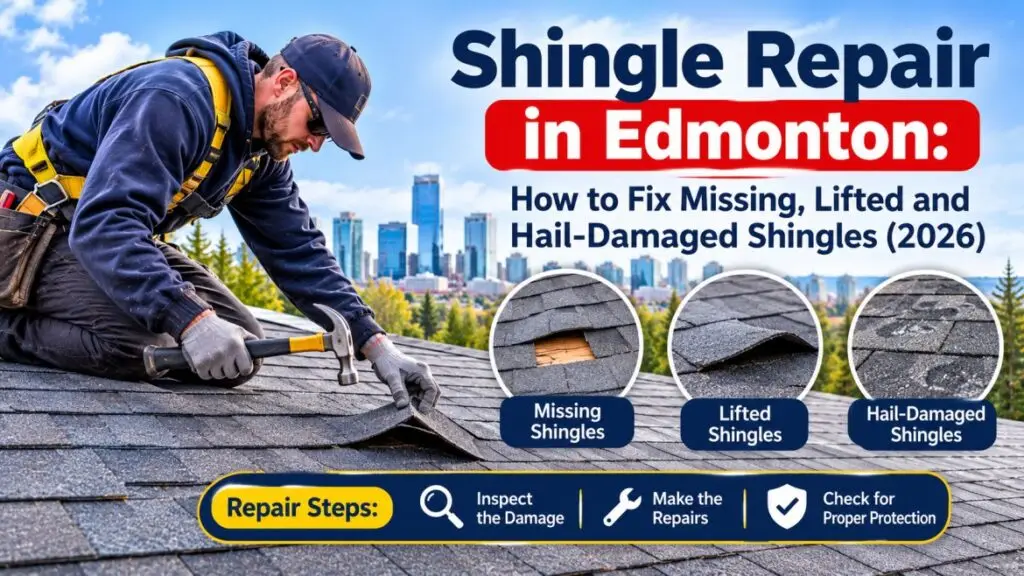
Wind-lifted and missing shingles. Strong gusts get under the edge of a shingle, break its seal strip and either fold it back (creasing it) or tear it off completely. Look for shingles on the lawn, a visible line across a creased tab, or darker patches where the underlayment is showing.
Hail damage. Hail knocks granules off and leaves dark, bruised spots that feel soft when pressed. Severe hail cracks or punctures shingles. Much of this damage isn’t visible from the ground, so a close inspection after a storm matters.
Cracking and brittleness. Asphalt shingles dry out with age and UV exposure, and deep cold makes them stiffer. Older shingles crack along the tabs, especially on south- and west-facing slopes that get the most sun.
Curling and cupping. Edges that curl up or centres that cup downward usually point to an aging roof or poor attic ventilation that cooks the shingles from underneath.
Granule loss. Piles of granules in your eavestroughs or at the bottom of downspouts mean shingles are wearing out. Bald spots expose the asphalt to UV and speed up failure.
Nail pops. Nails that work their way up lift the shingle above them and create a hole. They’re common on roofs installed in cold weather or over damp decking.
Ice dam damage. Ice along the eaves can lift the bottom rows of shingles and let meltwater back up underneath. See our ice dam guide for prevention.
If you’re not sure what you’re looking at, this list of warning signs your shingles need repair shows what to watch for.
Shingle repair costs in Edmonton (2026)
| Repair | Approx. cost (CAD) | Typical time |
|---|---|---|
| Replace a few missing or damaged shingles | $250 – $650 | 1–3 hours |
| Reseal lifted shingles and fix nail pops | $250 – $500 | 1–2 hours |
| Repair a section of 1–2 squares (100–200 sq ft) | $600 – $1,500 | Half to full day |
| Replace a full slope | $2,500 – $5,000+ | 1 day |
| Shingle repair plus rotten decking | Add about $100 – $180 per 4×8 sheet | Varies |
| Emergency or after-hours repair | Usually 25–50% more | Varies |
Approximate 2026 ranges. Your price depends on roof height and pitch, access and what’s found under the damaged shingles.
What changes the price:
- Minimum service call. Most roofers charge a minimum of a few hundred dollars, so replacing three shingles often costs close to the same as replacing ten.
- Roof pitch and height. Steep and two- or three-storey roofs need more safety gear and time.
- Shingle type. Standard architectural shingles are the cheapest to repair; impact-resistant, designer and older discontinued shingles cost more.
- Hidden damage. Wet or rotten decking under the missing shingles adds cost.
- Season. Winter repairs may need extra steps, such as hand-sealing, and sometimes a return visit.
Tip: bundle repairs. If you have a few missing shingles, a cracked vent boot and a loose eavestrough, get them done in one visit. For other repair types, see the full roof repair cost guide for Edmonton.
Colour matching and older shingles: the hidden challenge
Two problems make shingle repair harder than it looks, and both get worse as a roof ages.
Fading and discontinued colours. Shingles fade in the sun, so even the same product and colour won’t match a 12-year-old roof exactly. Manufacturers also change and discontinue colours and profiles over time. A good roofer will:
- Identify the brand and product line from the shingles themselves
- Source the closest current colour and profile
- Use spare bundles if you have any left from the original install (check the garage or shed)
- Where matching is critical, borrow shingles from a hidden area, such as a back slope, and put the new ones there instead
A new patch usually blends in more over a season or two as it weathers, but on an older roof some difference is normal.
Brittle shingles. To replace one shingle, a roofer has to lift the rows above it and remove nails. On older roofs, and especially in cold weather, those surrounding shingles can crack when lifted, so a repair of three shingles can become a repair of fifteen. An experienced roofer will warn you about this before starting and will use techniques that limit the damage.
If colour matching and brittleness are going to make a repair stand out or spread, it may be time to weigh a roof replacement instead. Your roofer should tell you honestly.
What a proper shingle repair involves
A quick slap of roofing cement over a missing shingle won’t survive an Edmonton winter. A proper repair looks like this:
- Inspect the whole roof, not just the damaged spot. Wind and hail rarely damage one shingle in isolation. A roofer checks every slope, the flashing, vents and valleys.
- Check the underlayment and deck. If water has been getting in, the roofer probes for soft or rotten decking and replaces it before new shingles go on.
- Carefully release the rows above. The seal strips on the shingles above the damaged area are gently broken so they can be lifted without cracking.
- Remove the damaged shingles and nails.
- Install new shingles with the right nailing. Each shingle is fastened in the nail line specified by the manufacturer. In high-wind areas, roofers often use a six-nail pattern instead of four for extra hold.
- Reseal everything that was lifted. Spots of roofing sealant under the tabs hold the shingles down until the factory seal strips re-bond in warm weather.
- Check the surrounding area. Nail pops, cracked tabs and loose flashing nearby are fixed in the same visit.
- Photos before and after. You should get photos showing the damage and the finished repair, which also help if you ever make an insurance claim.
If the shingles were torn off by wind, ask about the roof’s wind rating and whether extra fastening on vulnerable edges and ridges makes sense.
Can shingles be repaired in winter?
Yes. Missing and damaged shingles can be repaired in an Edmonton winter, and they should be, because an open spot lets snowmelt straight into the roof deck. Winter repairs just need a few extra steps:
- Seal strips won’t bond in the cold. The adhesive strip on each shingle needs warmth from the sun to activate. In winter, roofers hand-seal the new shingles with a cold-weather roofing sealant so they don’t lift in the next windstorm.
- Shingles are stiffer and more brittle. New shingles are kept warm before installation, and surrounding shingles are lifted with extra care to avoid cracking.
- Snow and ice must be cleared from the repair area first, which adds time.
- Safety comes first. Repairs are done on calmer, drier days. On icy or very cold days, a temporary repair may be used to stop water until conditions improve.
Sometimes a roofer will do a temporary fix in winter and return in spring to check that the shingles have sealed and to finish any cosmetic work. That’s normal, and it’s far better than waiting until spring with an open hole.
What you can do now: after windy days, walk around the house and look for shingles on the ground or dark patches on the roof. If you spot one, book a repair before the next snowfall. For leaks that are already coming through, see our guide on roof leaks in winter.
Repair or replace your shingles?
| Repair is usually enough when… | Replacement is usually better when… |
|---|---|
| Damage is limited to one area | Damage or wear is spread across several slopes |
| The roof is under about 15 years old | The roof is close to 20 years old |
| Shingles still lie flat and keep their granules | Shingles are curling, cracking or bald |
| It’s the first problem in years | You’re paying for repairs every year or two |
| Colours can be matched reasonably well | Patches would be obvious or keep spreading |
A useful rule of thumb: if the repair would cost more than about a third of a new roof, replacement usually makes more sense. See roof shingles replacement cost in Edmonton to compare.
Should you claim shingle damage on insurance?
Wind and hail damage are often covered by home insurance, but small repairs frequently cost less than the deductible. If a repair is a few hundred dollars and your deductible is $1,000 or more, paying out of pocket usually makes sense. For widespread hail or wind damage, get a professional inspection with photos first, then talk to your insurer. Our hail damage insurance claim guide walks through the process.
Why shingle repair isn’t a DIY job
It looks simple, but climbing onto a roof, especially in cold, wet or icy weather, is dangerous. Lifting brittle shingles without the right technique often damages more than it fixes, and incorrect nailing or caulk-only patches can void your shingle warranty and fail within a season.
Get your shingles fixed before the next storm
Silverline Roofing repairs missing, lifted and hail-damaged shingles across Edmonton and nearby communities. We inspect the whole roof, match your shingles as closely as possible, and show you photos of the problem and the finished repair, with an honest answer on whether repair or replacement makes more sense.
Book your shingle repair or call (587) 754-9495. Learn more about our roof repair services in Edmonton.
Shingle repair FAQs
How much does it cost to replace a few shingles in Edmonton?
Replacing a few missing or damaged shingles usually costs about $250 to $650, including the service call. Larger sections of one to two squares typically cost $600 to $1,500.
Can a roofer match my existing shingles?
Usually closely, but not always perfectly. Shingles fade with age and colours get discontinued. Roofers identify the product, source the closest match, and sometimes move shingles from a hidden slope to the visible area.
Can shingles be repaired in winter?
Yes. Roofers hand-seal new shingles with cold-weather sealant because the factory seal strips won’t bond in the cold. On very icy days, a temporary fix may be used until conditions improve.
Is one missing shingle a big deal?
It can be. A missing shingle exposes the underlayment and deck to sun and snowmelt, and wind can peel off the shingles around it. Fixing it quickly is far cheaper than repairing water damage later.
How long does shingle repair take?
Most small shingle repairs are finished in one to three hours. Larger sections or repairs that involve rotten decking can take half a day or more.
Will insurance pay for missing shingles?
Wind and hail damage is often covered, but small repairs are frequently cheaper than the deductible. Get photos and a written estimate, then decide whether a claim makes sense.
When should I replace instead of repairing shingles?
Replace when damage covers several slopes, shingles are curling or cracking across the roof, the roof is near 20 years old, or you’re paying for repairs every year or two.