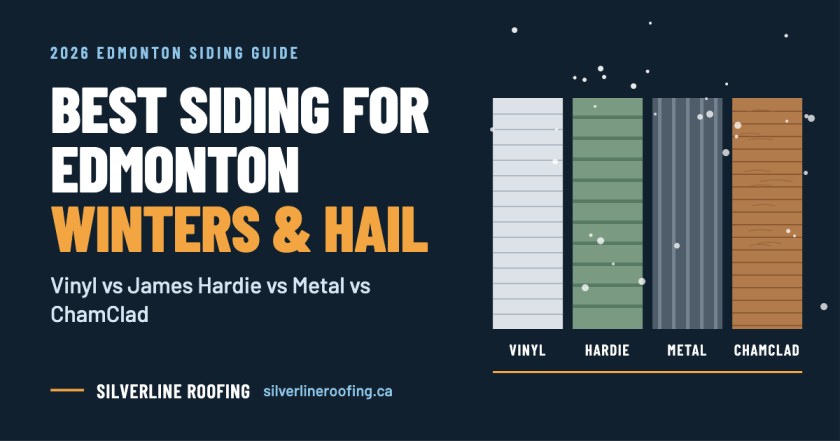
Best Siding for Edmonton Winters and Hail (2026): Vinyl vs James Hardie vs Metal vs ChamClad
What is the best siding for Edmonton? For most Edmonton homes, James Hardie fibre cement or steel siding is the best choice for cold and hail, while vinyl remains the most affordable option. Fibre cement and steel stay tough at -30°C and resist hail far better than vinyl, which becomes brittle in deep cold. ChamClad, a wood-look PVC siding made right here in Edmonton, is a strong pick for feature walls and modern designs. The right answer depends on your budget, how long you’ll stay in the home, and how exposed it is to hail. Edmonton is one of the toughest places in Canada to be a wall. Siding here has to handle -35°C cold snaps, dozens of freeze-thaw swings each spring, hot UV-heavy summer days and hailstorms. A material that’s fine in Vancouver or Ontario can crack, fade or dent here years ahead of schedule. This guide compares the four siding types Silverline Roofing installs, side by side, on what actually matters in Edmonton: cold-weather toughness, hail resistance, lifespan, cost and what your insurer thinks of them in 2026. Edmonton siding comparison at a glance Vinyl James Hardie (fibre cement) Steel / metal ChamClad (wood-look PVC) Cold-weather toughness Fair — brittle in deep cold Excellent Excellent Good Hail resistance Low to fair High High (may dent, won’t crack) Good (manufacturer rated high impact) Typical lifespan in Edmonton About 25 years 30–50 years 40–50+ years Backed by a 50-year warranty Fire resistance Melts Non-combustible Non-combustible PVC (not non-combustible) Maintenance Very low Low (repaint after many years) Very low Very low, no staining Price level (2026) Lowest Mid to high High Mid to high Best for Tight budgets, rentals, sheltered homes Most homes, hail exposure, resale value Max durability, modern looks Feature walls, soffits, warm wood look In short: vinyl is the budget option, James Hardie is the best all-rounder, steel is the toughest, and ChamClad gives you the wood look without the upkeep. Why Edmonton is so hard on siding Deep cold makes some materials brittle. Vinyl is a plastic. In a -30°C cold snap it stiffens, and a knock from a hockey puck, a snow shovel or hailstones can crack a panel that would simply flex in July. Fibre cement and steel don’t lose toughness in the cold. Freeze-thaw cycles find every weak spot. Edmonton swings above and below freezing many times each spring and fall. Water that gets behind poorly lapped siding or around windows freezes, expands and pries joints open. This is why installation, the weather barrier and flashing behind the siding, matters as much as the material you pick. Hail is a real and rising risk. Edmonton isn’t Calgary, but it sits in the province’s hail corridor, and 2026 was a rough year for storms across the Edmonton region. Alberta hailstorms have caused about $6 billion in insured damage over the past five years, according to the Insurance Bureau of Canada (IBC). Long, sunny summers fade colours. High UV on long June days fades cheap vinyl and paint. Darker colours fade fastest, so pay attention to colour warranties if you want a dark exterior. Expansion and contraction. Vinyl grows and shrinks more than any other common siding with temperature. Installed too tight, it buckles in summer; installed carelessly in winter, it can crack or leave gaps. Each siding material, explained for Edmonton homes Vinyl siding: the affordable standard Vinyl has been the default on Edmonton new builds since the 1990s, and it’s still the most affordable way to re-side a home. It never needs painting, comes in hundreds of colours and profiles, and is easy to repair one panel at a time. The trade-off is toughness. Standard vinyl gets brittle in deep cold and is the most likely siding to crack in a hailstorm. Thicker premium panels and insulated vinyl perform noticeably better, so if you choose vinyl, don’t buy the thinnest grade. Brands like Royal, Gentek, Kaycan and CertainTeed all offer heavier panels for cold climates. Choose vinyl if: budget is the priority, it’s a rental, or the home is sheltered from the worst hail. See our vinyl siding installation options. James Hardie fibre cement: the best all-rounder James Hardie siding is made from cement, sand and wood fibres, and the company makes a product line designed for northern climates’ freeze-thaw cycles. It’s thick, rigid and non-combustible, it doesn’t get brittle in the cold, and it holds up well in hail. The City of Calgary’s climate-ready guidance lists fibre cement among the most resilient siding types for hail, wind and wildfire. It costs more than vinyl and needs skilled installers, since the warranty depends on following Hardie’s installation rules. Factory-baked ColorPlus finishes resist fading for years. Choose James Hardie if: you want the best balance of looks, toughness and resale value. Learn more about James Hardie siding in Edmonton. Steel and metal siding: the toughest option Steel siding is the hardest-wearing choice for an Edmonton exterior. It doesn’t get brittle at -35°C, it’s non-combustible, and in hail it tends to dent rather than crack, so the wall stays watertight even after a big storm. Today’s steel comes in realistic wood-grain finishes as well as sleek modern panels. It’s typically the priciest of the four, and a severe storm can still leave cosmetic dents. Aluminum is lighter and cheaper but dents more easily than steel. Choose metal if: you want maximum durability and a long lifespan, or a modern look. Explore metal siding installation, or metal cladding for commercial buildings. ChamClad: wood look, made in Edmonton ChamClad is a wood-look PVC siding and soffit manufactured in Edmonton. It gives you the warmth of cedar without staining, sealing or rot. The manufacturer promotes it as made from recycled PVC with high impact resistance and a 50-year warranty. It’s especially popular for feature walls, entryways and soffits on modern homes. Because it’s PVC, it isn’t non-combustible like fibre cement or steel. Ask for the current warranty terms and impact data when you get a quote. Choose ChamClad