How do you repair a mobile home roof in Edmonton?
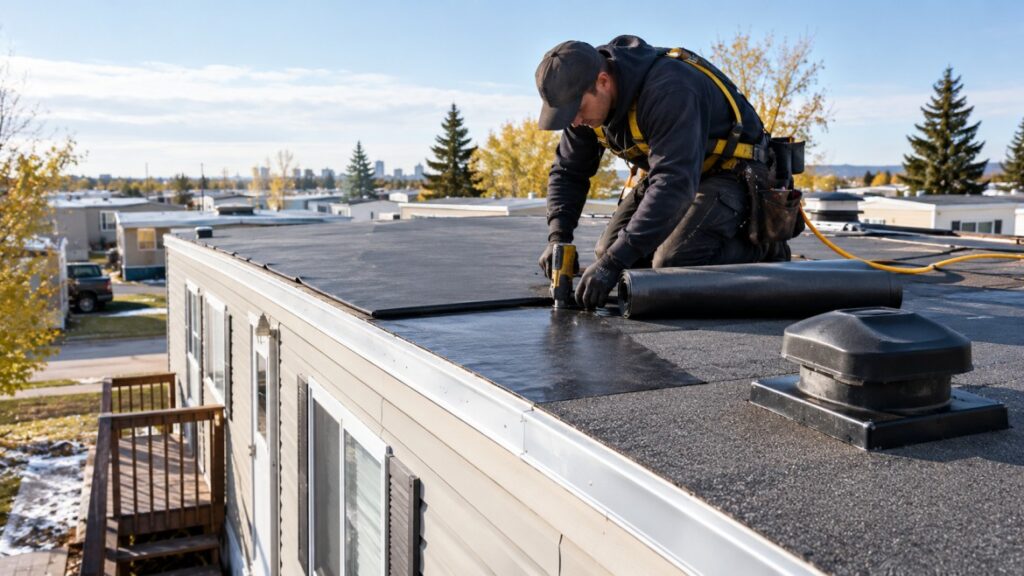
Most mobile home roof leaks in Edmonton can be fixed by resealing seams and fasteners, patching the damaged area, or recoating the whole roof. When the roof is worn out, the long-term fixes are a new membrane over the existing roof or a metal roof-over, which adds a new, stronger roof on top. The right choice depends on your roof type, its age, how much damage there is and how much snow your home’s roof is designed to carry. Mobile and manufactured homes are a common part of the Edmonton area, from established communities in the city to parks in Spruce Grove, Leduc, Sherwood Park and beyond. Their roofs are built differently from a regular house: they’re usually lower-sloped, lighter and designed for a specific snow load. That makes them more vulnerable to leaks, condensation and snow damage in an Alberta winter, and it means the usual “just reshingle it” answer often doesn’t apply. This guide explains the types of mobile home roofs, the problems we see most in Edmonton, every repair option from a small patch to a full roof-over, typical costs, and how to protect your roof through the winter. What kind of roof does your mobile home have? Before choosing a repair, it helps to know which roof you’re dealing with. Most mobile and manufactured homes in the Edmonton area have one of these: Roof type What it looks like Common on Typical weak spots Metal (rolled or “bowstring”) roof Slightly curved or low-sloped sheet metal, often painted or coated Older single-wides Seams, fasteners, rust, condensation underneath Low-slope membrane or coated roof Flat-looking roof covered with rubber membrane or roof coating Older homes and previous repairs Cracked coating, open seams, ponding water Pitched shingle roof Looks like a regular house roof with asphalt shingles Newer manufactured homes and double-wides Shingles at low pitch, flashing, ventilation Roof-over A newer roof (often metal) built on top of the original Homes that have already been upgraded Flashing where it meets the walls, fasteners Look for the label. Manufactured homes built in Canada are normally certified to the CSA Z240 standard and carry a label, often inside a kitchen cabinet, closet or near the electrical panel, that lists the home’s design details. If you can find it, keep a photo. It helps your roofer understand how the home was built and what loads it was designed for. The most common mobile home roof problems in Edmonton Leaking seams and fasteners. Metal roofs expand in summer heat and shrink in -30°C cold. Over the years, that movement loosens screws and cracks the sealant along seams, and water gets in during the spring melt or a summer storm. Cracked or worn coatings. Many older mobile home roofs rely on a roof coating for waterproofing. UV, hail and freeze-thaw cycles break it down, and once it cracks, water finds the gaps. Ponding water. Low-slope roofs drain slowly. Where the roof has sagged slightly, water and melting snow sit in one spot and eventually work through seams or fasteners. Condensation that looks like a leak. Warm, moist air from cooking, showers and people inside the home rises and hits the cold metal roof, especially on metal roofs with little insulation. It condenses or freezes, then drips back down, causing stains that look exactly like a roof leak. Bathroom fans, a range hood and moderate indoor humidity make a big difference. Snow load. Mobile home roofs are lighter than a regular house roof and are designed for a set snow load. Heavy or drifted snow, especially wet spring snow, can overload an older roof and cause sagging, cracks in ceilings or doors that stick. Ice at the edges. Like any roof, mobile homes can form ice along the edges when heat escapes and melts snow. On a low-slope roof, the trapped water has even more chance to get under seams. Our ice dam guide explains how they form. Wind and hail damage. Lightweight roofs are more exposed to wind uplift, and hail can dent metal, crack coatings and puncture membranes. After a storm, look for loose edges, lifted panels and new stains inside. Failed flashing around vents and skylights. Plumbing vents, furnace flues and skylights all cut through the roof. The seals around them are often the first thing to fail. Mobile home roof repair options, from small fix to full upgrade 1. Reseal seams, screws and flashing The simplest fix for many leaks. A roofer replaces worn fasteners, reseals seams and resets the flashing around vents and skylights with sealants made for the roof material. It’s quick and affordable, and it’s often all a younger roof needs. Best for: isolated leaks on a roof that’s otherwise in good shape. 2. Patch the damaged area Where a section is punctured, rusted through or torn, the roofer removes or covers the damage with a compatible patch. On membrane roofs, that means a new piece of membrane bonded over the area. On metal roofs, it may mean a new metal section. Best for: storm damage, a fallen branch or a single bad spot. 3. Recoat the whole roof A roof coating renews the waterproof surface over the entire roof. It seals small cracks and seams and can reflect summer heat. Coatings need dry weather and above-freezing temperatures to cure, so in Edmonton this is a late spring to early fall job, not a winter one. Best for: an older coated or metal roof that’s leaking in many small places but is still structurally sound. 4. Install a new membrane A single-ply membrane such as EPDM or TPO can be installed over the existing roof (with insulation board if needed) to create a new, continuous waterproof layer. It’s a long-term fix for low-slope roofs and handles freeze-thaw well when installed properly. Best for: worn low-slope roofs where you want a lasting fix without changing the roof shape. Silverline also installs flat roofing in Edmonton, using the same systems. 5. Metal roof-over A metal roof-over adds a lightweight frame
How do you repair a mobile home roof in Edmonton? Read More »