
Silverline Roofing Ltd.

roof inspection

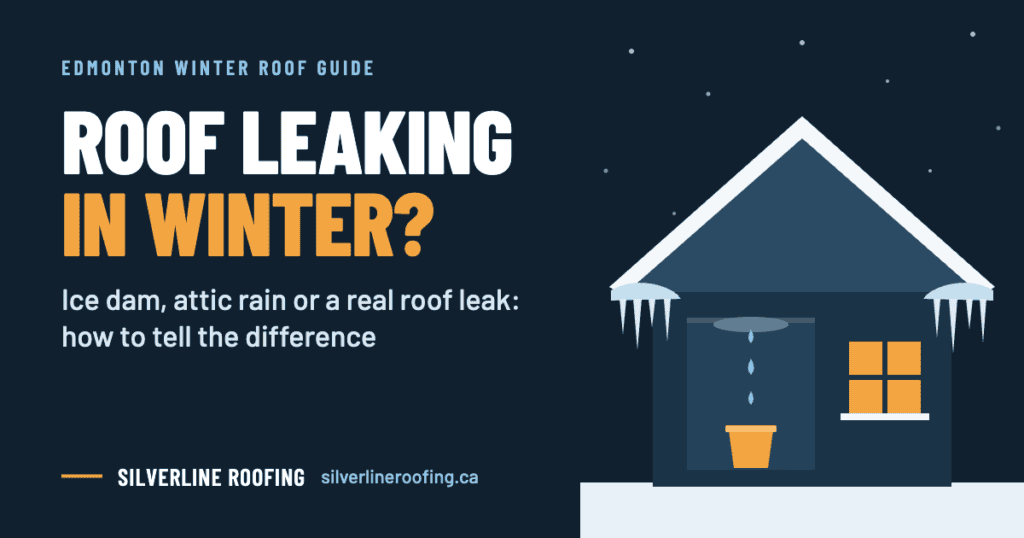
Ceiling dripping this winter? Learn how to tell an ice dam, attic rain and a real roof leak apart, what to do first, and what winter roof repairs cost in Edmonton

Why is my roof leaking in winter?

In Edmonton, a winter roof leak almost always comes from one of three things: an ice dam pushing meltwater under your shingles, attic rain (frost inside the attic melting during a warm spell), or a true roof leak through damaged flashing, vents or shingles. They look the same from inside your house, a stain or drip on the ceiling, but each one has a different cause and a different fix. Getting the cause right matters. Homeowners often pay for a roof repair when the real problem is attic moisture, or seal an attic when the real problem is a cracked vent boot. Either way, the leak comes back next winter. This guide shows you how to tell the three apart in a few minutes, what to do in the first hour, and what a winter roof leak repair in Edmonton usually involves. Ice dam, attic rain or roof leak? How to tell in 5 minutes Match what you see to the most likely cause. Timing and location of the water are your best clues. What you notice Most likely cause Why Water near exterior walls or above windows, thick ice along the eaves, icicles Ice dam Meltwater backs up behind ice at the roof edge and runs under shingles Drips in many spots on the top-floor ceiling, starting on the first mild day after a cold snap Attic rain Frost built up on the underside of the roof deck melts all at once Wet spots around bathroom fans or light fixtures, frost or ice on nails in the attic Attic rain Warm, moist air is escaping into the attic and freezing Leak in the same spot every time, near a chimney, skylight or plumbing vent Roof leak (flashing or vent) Water gets in through a failed seal, usually during melts or rain Leak started after a summer storm or high winds, stain grows during thaws Roof leak (storm damage) Lifted, cracked or hail-bruised shingles let water through Fog or water on a skylight or sun tunnel, no stain around it Condensation Indoor humidity is collecting on cold glass, not a roof leak Quick test: if the drips appear in several places at once on a sunny, mild day after a long cold spell, think attic rain first. If water shows up in one spot every time snow melts, think flashing or vents. If you can see a ridge of ice along the eaves, think ice dam. Cause 1: Ice dams An ice dam is a ridge of ice along the edge of your roof that traps meltwater behind it. Heat escaping from your house warms the upper roof, snow melts, the water runs down to the cold eaves and refreezes. The trapped water then works its way under the shingles and into your walls or ceiling. Edmonton’s winters are made for ice dams, because temperatures often swing above and below freezing within a few days. Signs it’s an ice dam: What to do: don’t chip at the ice with a hammer or shovel; you’ll tear the shingles and eavestroughs. A roofer can remove the dam safely with steam. The long-term fix is stopping heat loss into the attic and making sure your eavestroughs drain. Our full ice dam prevention and repair guide covers this step by step. Cause 2: Attic rain — the “leak” that isn’t your roof Attic rain happens when frost builds up inside your attic during a long cold snap, then melts all at once when the weather warms up. The water drips through the insulation and stains your ceiling, so it looks exactly like a roof leak. But the water came from inside your house, not through the shingles. Here’s how it builds up. Everyday moisture from showers, cooking and laundry rises as warm air. If that air leaks into the attic through gaps around the attic hatch, pot lights, bathroom fans or plumbing stacks, it hits the cold underside of the roof deck and freezes. After a week of -25°C weather, an attic can be coated in frost. The first mild, sunny day melts it faster than the attic can dry out. Signs it’s attic rain: What to do: Attic rain won’t be fixed by new shingles. That’s why diagnosis comes before any repair quote. Ventilation helps, but on its own it rarely solves the problem if humidity and air leaks aren’t dealt with too. Cause 3: A real roof leak A true roof leak means water is getting through the roof itself, usually at flashing, vent boots or damaged shingles. In winter these leaks show up mostly during melts, when snow on the roof turns to water and finds the weak spot. The most common sources on Edmonton homes: Signs it’s a roof leak: the leak shows up in the same spot each time, sits below a chimney, vent or skylight, and gets worse during thaws or winter rain. Many of these are covered in our list of warning signs your shingles need repair. What to do in the first hour of a winter roof leak Whatever the cause, these steps limit the damage until a roofer arrives: What not to do: Can a roof be repaired in an Edmonton winter? Yes. Leaks can and should be fixed in winter, but some repairs are temporary until warmer weather. Roofers can remove snow and ice, replace vent boots, re-secure flashing and install cold-weather sealants or temporary membranes. Some materials, like shingle sealant strips and torch-on membranes, bond best above certain temperatures, so a permanent fix may be scheduled for a milder day. Typical winter costs in Edmonton (approximate, 2026): Winter repair Typical cost (CAD) Emergency tarp or temporary seal $350 – $900 Ice dam steam removal $500 – $1,500 Vent boot or small flashing repair $200 – $800 Leak repair with decking damage $1,000 – $2,500 Attic ventilation improvements $300 – $1,500 After-hours and storm-day calls usually cost more. See our full roof repair cost guide for every repair type. If your roof is

Why is my roof leaking in winter? Read More »
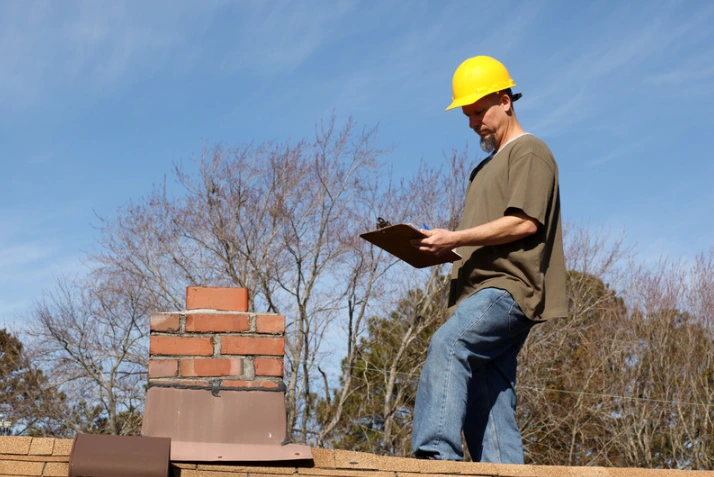
Roof inspection in Beaumont with an inspector reviewing a rooftop near a chimney.

A Complete Guide to Roof Inspections in Edmonton

Why Roof Inspections Matter More in Edmonton Than Almost Anywhere Else Edmonton is one of Canada’s most weather-extreme cities. Temperatures swing from -40°C in January to +35°C in July — a range of 75 degrees. Add relentless freeze-thaw cycles, Alberta’s notorious hailstorms, heavy snowpack, and UV radiation during long summer days, and you have a recipe for accelerated roof wear that most homeowners simply don’t see coming. That’s not just bad luck — it’s physics. Constant expansion and contraction causes shingles to crack, flashings to separate, and sealants to fail. A roof that might last 25 years in a milder climate often shows significant deterioration after 12–15 years here in Edmonton. And because most of this damage is invisible from the ground, it goes unnoticed until water is already leaking into your attic or walls. A professional roof inspection is your early warning system. It catches small, inexpensive problems before they become large, expensive disasters. At Silverline Roofing, our certified inspectors have assessed hundreds of Edmonton roofs — and the one thing they consistently say is this: the costliest repairs are almost always the ones that could have been caught months earlier. What Is a Professional Roof Inspection? A professional roof inspection is a systematic, expert evaluation of your roof’s condition — covering everything from the shingles and flashings on the exterior, to the decking, insulation, and ventilation in your attic. It’s far more comprehensive than a quick look from the driveway. Here’s what a thorough inspection by Silverline Roofing in Edmonton includes: Exterior Assessment Interior/Attic Assessment Advanced Diagnostics (Comprehensive Inspection) The result is a clear, honest picture of your roof’s current condition, its expected lifespan, and exactly what — if anything — needs to be done. Drone Roof Inspections in Edmonton: The Future of Roof Assessment One of the most significant advances in roofing over the last decade is the use of drone technology for roof inspections. Roof inspection drones allow our team to safely assess steep-pitched roofs, complex commercial structures, and hard-to-reach areas without putting inspectors at risk. How Drone Roof Inspections Work A drone roof inspection uses a remotely piloted aircraft equipped with high-resolution cameras — and in advanced configurations, thermal imaging sensors — to capture detailed aerial footage of your entire roof surface. The drone can hover over specific areas, zoom into suspicious spots, and record everything in 4K detail. For residential roof inspections, drones are particularly valuable for: For commercial roof inspections in Edmonton, drones combined with thermal imaging can detect moisture trapped beneath flat roofing membranes — moisture that is completely invisible to the naked eye but that causes insulation failure and structural damage if left unchecked. Benefits of Drone Roof Inspections Safety first: Roof inspections by drone eliminate the need for inspectors to navigate steep or slippery surfaces, reducing the risk of accidents on your property. Speed and efficiency: A drone can complete a full aerial survey of a large commercial roof in a fraction of the time a manual walking inspection would require. For multi-building complexes, this is a game-changer. Unmatched detail: High-resolution drone imagery captures granule loss, micro-cracking, lifted flashings, and hail impact marks that may not be visible from the ground or even from a ladder. Better documentation: Drone footage provides irrefutable photographic evidence of your roof’s condition — exactly what insurance companies need to approve claims. Drone Roof Inspection Cost in Edmonton Drone roof inspection costs in Edmonton typically range between $300 and $600, depending on the size of your roof, the level of reporting required, and whether thermal imaging is included. For large commercial properties, costs may be higher but are often offset by the speed of the assessment and the quality of the data. At Silverline Roofing, drone inspection is offered as part of our comprehensive and commercial inspection packages. Contact us for a free estimate. Roof Inspection Cost in Edmonton: What to Expect Understanding roof inspection costs helps you plan ahead and choose the right level of service for your situation. Here’s a transparent breakdown of typical inspection pricing in Edmonton: Inspection Type Typical Cost What’s Included Basic Roof Inspection $250 – $350 Visual assessment of all exterior components, gutter check, basic attic review Comprehensive Inspection $350 – $550 Full interior and exterior evaluation, thermal imaging, moisture testing, detailed written report Real Estate / Pre-Purchase Inspection $450 – $650 Complete condition report, lifespan estimate, repair projections, documentation for negotiations Storm / Hail Damage Inspection $300 – $500 Post-storm damage documentation, insurance claim support, cause determination Silverline Roofing Offer: When you choose Silverline for any recommended repairs following your inspection, the inspection fee is applied toward the cost of those repairs. It’s our way of rewarding homeowners who are proactive about their roof health. Hail Damage Roof Inspection in Edmonton: Don’t Wait Until It’s Too Late Alberta is one of the most hail-prone provinces in Canada. Edmonton and the surrounding region see significant hailstorms every summer, and the damage is often far more serious than it looks. Hail impact on asphalt shingles dislodges the granule coating — the layer that protects the underlying mat from UV degradation and water infiltration. Once that granule layer is compromised, your roof’s lifespan drops dramatically. The dangerous thing about hail damage is that it often looks minor from the ground. Small impact craters and granule loss aren’t visible from a driveway. But a certified inspector examining your roof up close — or using drone imagery — will spot the damage immediately. Why a Post-Hail Roof Inspection Is Urgent Insurance deadlines are real. Most home insurance policies in Alberta require you to report storm damage within a specific window — often 1 to 2 years. Missing that window means your claim is denied, even if the damage was clearly caused by a covered event. Damage compounds over time. A compromised shingle doesn’t stay “slightly damaged.” Through Edmonton’s freeze-thaw cycles, moisture penetrates the exposed mat, expands when it freezes, and accelerates deterioration. What was a $1,500 repair in June can become a

A Complete Guide to Roof Inspections in Edmonton Read More »

Scroll to Top