
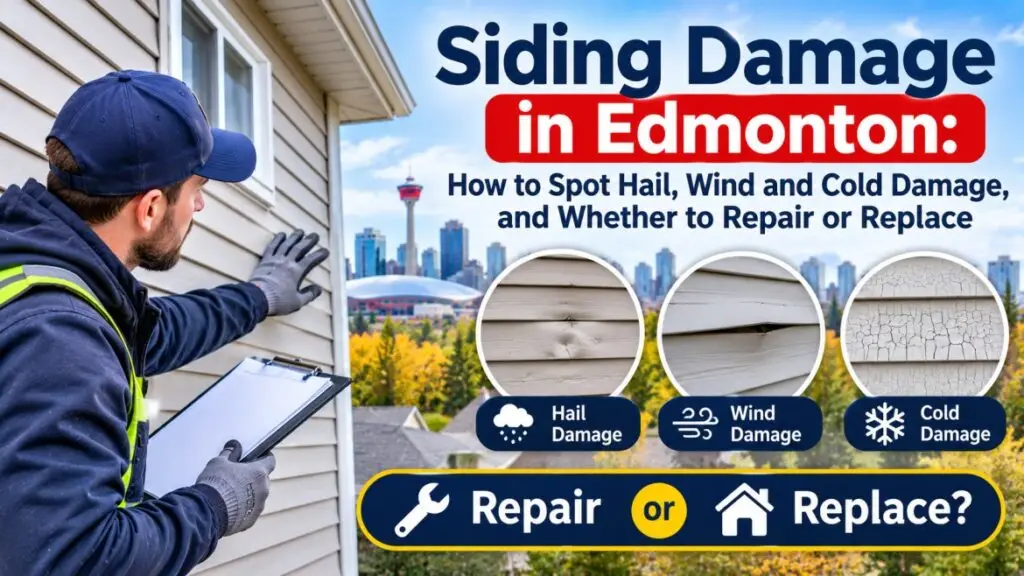
Should you repair or replace damaged siding?
Repair your siding when the damage is limited to a few panels or one wall, the siding is less than about 20 years old, and replacement panels can be matched. Replace it when damage covers several walls, the siding is brittle or badly faded, or the sheathing behind it is wet or rotting. In Edmonton, hail, windstorms and deep cold are the most common causes, and each affects vinyl, fibre cement and metal siding differently.
Siding is your home’s raincoat. When a panel cracks or blows off, wind-driven snow and rain can get behind it and soak the sheathing and insulation, often without any sign inside the house for months. Catching damage early keeps a few hundred dollars of repair from turning into a full re-side and wall repairs.
This guide explains how Edmonton’s weather damages each type of siding, the warning signs to look for, the repair options for each material, typical costs, and how to decide between repairing and replacing. It also covers what can be done before winter really sets in.
How Edmonton weather damages each type of siding
| Siding type | Hail | Wind | Deep cold |
|---|---|---|---|
| Vinyl | Cracks, holes and chips, worst on the storm-facing side | Panels unlock and blow off, especially at corners and gables | Becomes brittle; impacts crack it more easily |
| James Hardie fibre cement | Resists well; severe hail can chip edges or crack boards | Very stable when nailed correctly | Not affected by cold, but paint and caulking age |
| Steel and aluminum | Dents but stays watertight; aluminum dents more easily | Loose trim or panels if fasteners fail | Not affected |
| ChamClad (wood-look PVC) | Good impact resistance; check after severe storms | Stable when installed to spec | PVC stiffens in deep cold; follow manufacturer guidance for repairs |
Vinyl is on most Edmonton homes and is the most vulnerable. In summer it flexes when hit; in a -25°C cold snap, the same hockey puck, snow shovel or hailstone can crack it. Wind is the other big threat: once one panel unlocks, the wind gets behind the next.
Fibre cement like James Hardie resists hail and cold far better, but it can chip or crack at edges under severe impact, and its paint finish and caulked joints need attention over time.
Metal siding rarely cracks or leaks after hail, but dents are cosmetic damage that can be hard to repair invisibly.
For a full comparison of how each material performs, see our guide to the best siding for Edmonton winters and hail.
Signs your siding is damaged
Outside the house
Walk around your home on a bright day, paying extra attention to the walls that faced the last storm.
- Cracks, holes or chips in panels, especially near the bottom of walls and around corners
- Missing or loose panels that move or rattle in the wind
- Dents in metal siding, trim or window capping
- Warped, wavy or bulging panels, which can mean siding was nailed too tight or heat damage from a barbecue or reflected sunlight
- Gaps at corners, J-channels and around windows and doors
- Faded or chalky areas where the surface has broken down
- Peeling paint or soft spots on fibre cement or wood trim
- Damaged soffit, fascia or eavestroughs, which often take hits in the same storm
Inside the house
Some siding damage only shows up indoors:
- Peeling paint or bubbling drywall on exterior walls
- Musty smells or mould near windows and exterior walls
- Drafts or cold spots along walls
- Higher heating bills with no other explanation
If you see any of these, water or air may be getting past the siding and weather barrier. A professional can remove a panel or two to check the sheathing behind it.
After a hailstorm, take photos of every wall, including close-ups of any damage, before anything is repaired. They’re essential for an insurance claim.
Siding repair options by material
Vinyl siding. Vinyl panels lock into each other, so a roofer or siding installer uses a special unlocking tool to unclip the panel above, remove the damaged piece, and slide a new panel into place. Single panels or short runs can be replaced without disturbing the rest of the wall. Small holes can sometimes be patched, but on a visible wall, replacing the panel usually looks better and lasts longer.
James Hardie fibre cement. Damaged boards are cut out and replaced with new boards, which are then caulked and painted to match. Factory ColorPlus colours can be matched with touch-up products, but a slight difference may show on older, faded walls.
Metal siding. Small dents are hard to remove invisibly, so damaged panels are usually replaced. Matching an older metal colour and profile can be tricky, so ask early.
ChamClad and other PVC wood-look siding. Damaged boards are replaced following the manufacturer’s method. Because it’s a specialty product, confirm that replacement boards in your colour are available before planning the repair.
The colour-matching problem
The biggest challenge in siding repair isn’t the work itself; it’s matching. Siding fades over the years, and manufacturers change or discontinue colours and profiles. Here’s how good installers handle it:
- Identify the product from markings on the back of a removed panel.
- Source the closest current match in colour and profile.
- Swap panels from a hidden wall. Undamaged panels from a less visible side of the house are moved to the front, and new panels go on the hidden side.
- Replace a full wall if the difference would be obvious, so the colour changes at a corner rather than in the middle of a wall.
Ask about matching before work starts, so you know exactly how the repair will look.
For professional help, see our siding repair in Edmonton service, or explore vinyl siding and James Hardie siding options.
How much does siding repair cost in Edmonton?
Small vinyl siding repairs in Edmonton usually cost about $250 to $600, while larger repairs covering several panels or a section of wall typically run $600 to $1,500. Re-siding one full wall usually costs a few thousand dollars, depending on its size and the material.
| Repair | Approx. cost (CAD, 2026) |
|---|---|
| Replace one or a few vinyl panels | $250 – $600 |
| Repair a larger vinyl section or several areas | $600 – $1,500 |
| Replace and paint damaged James Hardie boards | $400 – $1,200 per area |
| Replace dented metal siding panels | $400 – $1,200 per area |
| Re-side one full wall (elevation) | About $3,000 – $8,000+ |
| Sheathing or house wrap repair behind siding | Added cost, priced once exposed |
Approximate ranges. Your price depends on the material, the height of the wall, access, how many panels are damaged, matching, and what’s found behind the siding.
What affects the cost:
- Material: vinyl is the least expensive to repair; fibre cement needs painting; specialty and discontinued products cost more.
- Height and access: second-storey and gable repairs need ladders or scaffolding.
- Matching: swapping panels from a hidden wall or replacing a full elevation adds labour.
- Hidden damage: wet sheathing, missing house wrap or poor window flashing must be fixed before new siding goes on.
- Trim and accessories: corners, J-channel, window capping, vents and light mounts add to the job.
Most siding contractors have a minimum service call, so bundling small repairs on several walls into one visit saves money. If you’re comparing repair with a full re-side, see this guide to siding replacement cost in Edmonton.
Repair or replace your siding?
| Repair makes sense when… | Replacement makes sense when… |
|---|---|
| Damage is limited to a few panels or one wall | Damage covers several walls |
| The siding is less than about 20 years old | Vinyl is brittle, faded or chalky everywhere |
| Replacement panels can be matched or swapped | Your colour or profile is discontinued and patches would stand out |
| The sheathing behind it is dry and solid | Sheathing is wet, soft or rotting |
| It’s the first problem in years | You’re repairing something every season |
| You plan to sell soon and need a tidy fix | You want better insulation, hail resistance or a new look |
If you replace, it’s a good chance to upgrade to a tougher material such as fibre cement or steel, add a modern house wrap, and replace soffit and fascia at the same time. See siding replacement in Edmonton for how the process works.
Does insurance cover siding damage?
Home insurance in Alberta generally covers sudden damage from hail, wind or impact, but not wear and tear, fading or poor installation. A few things to know:
- Compare the repair to your deductible. Small repairs often cost less than the deductible.
- Document everything with photos of each wall before any work is done.
- Ask how your policy handles matching. Policies differ on whether they’ll pay to replace undamaged panels so the colour matches.
- Ask about upgrades. Some insurers now help pay for more resilient siding, such as fibre cement or steel, after a hail claim, and hail-resistant materials may lower premiums over time.
- Get a written assessment from a siding or roofing contractor to support the claim.
Our hail damage insurance claim guide explains the steps; the same approach applies to siding.
Can siding be repaired in winter?
Yes. Damaged or missing siding should be repaired as soon as possible, even in winter, because wind-driven snow and meltwater can get behind open panels and soak the wall. Winter repairs just take a little more care:
- Vinyl is brittle in the cold. Installers keep replacement panels warm, unlock surrounding panels gently, and leave the right expansion gaps so the new panels don’t buckle in summer.
- Caulking and paint need temperature-rated products. On fibre cement, touch-up painting may wait for a milder day.
- Temporary protection is an option. If the weather is too severe for a full repair, an open area can be covered with house wrap and flashing tape until conditions improve.
Fall and early winter are also quieter than spring, when hail and wind damage keep siding crews busy, so booking now often means faster scheduling.
Before deep winter: walk around the house, check for cracked or loose panels and gaps around windows, and make sure eavestroughs and downspouts aren’t spilling water down the walls.
Get your siding damage checked
Silverline Roofing repairs and replaces vinyl, James Hardie, metal and ChamClad siding across Edmonton and nearby communities, including St. Albert, Sherwood Park, Spruce Grove and Leduc. We’ll check the damage, look behind the siding where needed, show you photos and give you a clear written quote, with an honest answer on whether repair or replacement makes more sense.
Book a siding assessment or call (587) 754-9495. Learn more about siding repair in Edmonton.
Siding damage FAQs
Can you replace just one piece of vinyl siding?
Yes. Vinyl panels interlock, so an installer can unlock the panel above, remove the damaged piece and slide in a new one without disturbing the rest of the wall.
How much does siding repair cost in Edmonton?
Small vinyl repairs usually cost about $250 to $600, and larger repairs covering several panels typically run $600 to $1,500. Re-siding a full wall usually costs a few thousand dollars.
What if my siding colour is discontinued?
Installers can source the closest current match, swap undamaged panels from a hidden wall to the visible side, or replace a full wall so the colour change happens at a corner.
Does hail damage siding?
Yes. Hail cracks and holes vinyl siding, especially in cold weather, chips fibre cement under severe impact, and dents metal siding. Check every wall after a hailstorm and take photos.
Is cracked siding an emergency?
Not usually, but it shouldn’t wait long. Cracks and missing panels let snow and rain get behind the siding, which can soak the sheathing and insulation over a winter.
Can siding be repaired in winter?
Yes. Vinyl needs extra care because it’s brittle in the cold, and some caulking and painting may wait for milder weather, but most repairs can be done year-round.
When should I replace siding instead of repairing it?
Replace when damage covers several walls, vinyl is brittle or badly faded everywhere, the colour can’t be matched, or the sheathing behind it is wet or rotting.