What is the best siding for Edmonton?
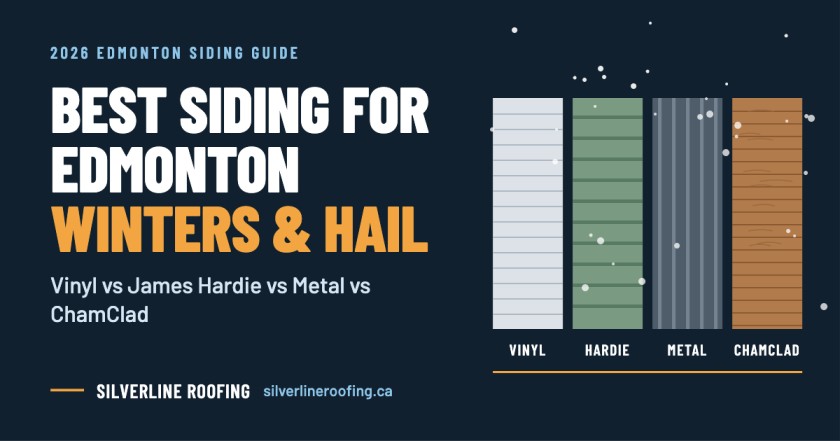
For most Edmonton homes, James Hardie fibre cement or steel siding is the best choice for cold and hail, while vinyl remains the most affordable option. Fibre cement and steel stay tough at -30°C and resist hail far better than vinyl, which becomes brittle in deep cold. ChamClad, a wood-look PVC siding made right here in Edmonton, is a strong pick for feature walls and modern designs. The right answer depends on your budget, how long you’ll stay in the home, and how exposed it is to hail.
Edmonton is one of the toughest places in Canada to be a wall. Siding here has to handle -35°C cold snaps, dozens of freeze-thaw swings each spring, hot UV-heavy summer days and hailstorms. A material that’s fine in Vancouver or Ontario can crack, fade or dent here years ahead of schedule.
This guide compares the four siding types Silverline Roofing installs, side by side, on what actually matters in Edmonton: cold-weather toughness, hail resistance, lifespan, cost and what your insurer thinks of them in 2026.
Edmonton siding comparison at a glance
| Vinyl | James Hardie (fibre cement) | Steel / metal | ChamClad (wood-look PVC) | |
|---|---|---|---|---|
| Cold-weather toughness | Fair — brittle in deep cold | Excellent | Excellent | Good |
| Hail resistance | Low to fair | High | High (may dent, won’t crack) | Good (manufacturer rated high impact) |
| Typical lifespan in Edmonton | About 25 years | 30–50 years | 40–50+ years | Backed by a 50-year warranty |
| Fire resistance | Melts | Non-combustible | Non-combustible | PVC (not non-combustible) |
| Maintenance | Very low | Low (repaint after many years) | Very low | Very low, no staining |
| Price level (2026) | Lowest | Mid to high | High | Mid to high |
| Best for | Tight budgets, rentals, sheltered homes | Most homes, hail exposure, resale value | Max durability, modern looks | Feature walls, soffits, warm wood look |
In short: vinyl is the budget option, James Hardie is the best all-rounder, steel is the toughest, and ChamClad gives you the wood look without the upkeep.
Why Edmonton is so hard on siding
Deep cold makes some materials brittle. Vinyl is a plastic. In a -30°C cold snap it stiffens, and a knock from a hockey puck, a snow shovel or hailstones can crack a panel that would simply flex in July. Fibre cement and steel don’t lose toughness in the cold.
Freeze-thaw cycles find every weak spot. Edmonton swings above and below freezing many times each spring and fall. Water that gets behind poorly lapped siding or around windows freezes, expands and pries joints open. This is why installation, the weather barrier and flashing behind the siding, matters as much as the material you pick.
Hail is a real and rising risk. Edmonton isn’t Calgary, but it sits in the province’s hail corridor, and 2026 was a rough year for storms across the Edmonton region. Alberta hailstorms have caused about $6 billion in insured damage over the past five years, according to the Insurance Bureau of Canada (IBC).
Long, sunny summers fade colours. High UV on long June days fades cheap vinyl and paint. Darker colours fade fastest, so pay attention to colour warranties if you want a dark exterior.
Expansion and contraction. Vinyl grows and shrinks more than any other common siding with temperature. Installed too tight, it buckles in summer; installed carelessly in winter, it can crack or leave gaps.
Each siding material, explained for Edmonton homes
Vinyl siding: the affordable standard
Vinyl has been the default on Edmonton new builds since the 1990s, and it’s still the most affordable way to re-side a home. It never needs painting, comes in hundreds of colours and profiles, and is easy to repair one panel at a time.
The trade-off is toughness. Standard vinyl gets brittle in deep cold and is the most likely siding to crack in a hailstorm. Thicker premium panels and insulated vinyl perform noticeably better, so if you choose vinyl, don’t buy the thinnest grade. Brands like Royal, Gentek, Kaycan and CertainTeed all offer heavier panels for cold climates.
Choose vinyl if: budget is the priority, it’s a rental, or the home is sheltered from the worst hail. See our vinyl siding installation options.
James Hardie fibre cement: the best all-rounder
James Hardie siding is made from cement, sand and wood fibres, and the company makes a product line designed for northern climates’ freeze-thaw cycles. It’s thick, rigid and non-combustible, it doesn’t get brittle in the cold, and it holds up well in hail. The City of Calgary’s climate-ready guidance lists fibre cement among the most resilient siding types for hail, wind and wildfire.
It costs more than vinyl and needs skilled installers, since the warranty depends on following Hardie’s installation rules. Factory-baked ColorPlus finishes resist fading for years.
Choose James Hardie if: you want the best balance of looks, toughness and resale value. Learn more about James Hardie siding in Edmonton.
Steel and metal siding: the toughest option
Steel siding is the hardest-wearing choice for an Edmonton exterior. It doesn’t get brittle at -35°C, it’s non-combustible, and in hail it tends to dent rather than crack, so the wall stays watertight even after a big storm. Today’s steel comes in realistic wood-grain finishes as well as sleek modern panels.
It’s typically the priciest of the four, and a severe storm can still leave cosmetic dents. Aluminum is lighter and cheaper but dents more easily than steel.
Choose metal if: you want maximum durability and a long lifespan, or a modern look. Explore metal siding installation, or metal cladding for commercial buildings.
ChamClad: wood look, made in Edmonton
ChamClad is a wood-look PVC siding and soffit manufactured in Edmonton. It gives you the warmth of cedar without staining, sealing or rot. The manufacturer promotes it as made from recycled PVC with high impact resistance and a 50-year warranty. It’s especially popular for feature walls, entryways and soffits on modern homes.
Because it’s PVC, it isn’t non-combustible like fibre cement or steel. Ask for the current warranty terms and impact data when you get a quote.
Choose ChamClad if: you love the wood look and want something local and low-maintenance. See ChamClad siding installation.
Hail-resistant siding can lower your insurance costs in 2026
A new study released September 28, 2026 found that Alberta homeowners in high-risk hail areas who install hail-resistant roofing and siding can cut their home insurance premiums by up to 50%. The study was done by MNP for the Insurance Bureau of Canada. It also found that hail can make up between 30% and 68% of the total premium in high-risk areas, and that more insurers now offer money toward resilient roofing and siding after a claim.
Insurers have been tightening hail coverage across Alberta. Alberta’s deputy superintendent of insurance has said every insurer surveyed now applies higher hail deductibles and limited payment terms, particularly on roofs and siding. Industry reporting has cited examples where a resilient home might carry a $2,500 hail deductible while a non-resilient one faces $10,000.
The highest risk is in and around Calgary, but Edmonton homeowners are seeing the same tighter deductibles and rising premiums.
What this means for you:
- Ask your insurer or broker whether they offer credits or lower deductibles for hail-resistant siding, and which materials qualify.
- After a hail claim, ask about upgrading instead of a like-for-like repair. Some insurers will now contribute toward a more resilient material, such as replacing damaged vinyl with fibre cement or steel.
- Keep your paperwork. Product names, impact ratings and installation invoices are what an insurer will want to see.
- Don’t forget the roof. The study covers roofing and siding together. Pairing new siding with an impact-resistant roof gives the biggest benefit. See our guide to upgrading to metal roofing after a hail claim.
Already dealing with storm damage? Start with a siding repair assessment and our hail damage insurance claim guide.
How much does new siding cost in Edmonton in 2026?
Most Edmonton homeowners pay roughly $10 to $15 per square foot of wall for vinyl siding and about $20 to $28 for James Hardie, installed. Steel runs higher, often $25 to $40. Siding is priced by the square foot of wall area, not floor area, and removing old siding usually adds about $2 to $3 per square foot.
| Siding type | Approx. installed cost per sq ft of wall (2026) | Example: 1,800 sq ft of wall |
|---|---|---|
| Vinyl (standard colours) | $10 – $15 | $18,000 – $27,000 |
| Vinyl (premium or dark colours) | $12 – $16 | $21,600 – $28,800 |
| James Hardie fibre cement | $20 – $28 | $36,000 – $50,400 |
| Steel siding | $25 – $40 | $45,000 – $72,000 |
| ChamClad | Quote-based; usually used as an accent | Varies by design |
| Removal of old siding | $2 – $3 extra | $3,600 – $5,400 |
Ranges are estimates from Edmonton and Canadian cost guides and vary widely by home. Your quote depends on your home’s details.
What changes the price:
- Wall area and height. Two- and three-storey homes need more scaffolding and time.
- Corners, gables and windows. Every cut and trim piece adds labour.
- What’s behind the old siding. Rotten sheathing, missing house wrap or poor flashing must be fixed first.
- Mixing materials. A popular Edmonton look is vinyl or Hardie on most walls with a ChamClad or stone accent at the entry.
- Soffit, fascia and eavestroughs. Replacing these at the same time is often cheaper than doing them later. See soffit installation and fascia installation.
- Season. Spring and summer are the busiest; booking in fall or winter can mean faster scheduling.
Thinking about a full re-side? Our siding replacement team gives itemized, written quotes.
Can you install siding in winter in Edmonton?
Yes, siding can be installed in an Edmonton winter, but the material matters. Steel handles cold installation best, fibre cement installs well with cold-weather sealants, and vinyl needs extra care because it becomes stiff and can crack when cut or nailed in deep cold. Most crews pause during extreme cold snaps.
| Material | Winter installation | What to know |
|---|---|---|
| Steel / metal | Very good | Metal doesn’t get brittle; work slows mainly for crew safety and daylight |
| James Hardie | Good | Panels handle cold well; caulking and touch-up paint need temperature-rated products |
| ChamClad | Fair to good | It’s PVC, so follow the manufacturer’s cold-weather guidance |
| Vinyl | Fair | Store panels warm, cut slowly, leave wider expansion gaps; avoid the coldest days |
Vinyl expands and contracts more than other sidings, so a panel installed at -20°C will grow noticeably by July. Experienced installers leave larger gaps in winter so it doesn’t buckle in summer. Following the manufacturer’s temperature guidance also protects your warranty.
Is fall or winter a good time to book? Often, yes. Spring and summer are the busiest seasons, so booking now can mean quicker scheduling and a crew that isn’t rushed. If your siding is cracked or loose, don’t wait until spring: wind-driven snow and meltwater can get behind it and damage sheathing and insulation over the winter.
New home or addition going up this winter? See our siding installation services.
How to choose the right siding for your Edmonton home
Answer these four questions and the choice usually becomes clear:
- What’s your budget? Tight budget: vinyl, in a thicker premium grade. Mid to high: James Hardie. Highest durability: steel.
- How long will you stay? Selling within five years: quality vinyl gives the best return for the money. Staying ten years or more: fibre cement or steel pays off through lifespan and lower repair costs.
- How exposed is your home to hail? Open lots, west-facing walls and newer neighbourhoods with few mature trees take the most hail. Choose fibre cement or steel for those walls.
- What look do you want? Classic lap siding: vinyl or Hardie. Modern or industrial: steel panels. Warm wood tones without upkeep: ChamClad accents.
Whatever you choose, installation decides how long it lasts. A properly installed vinyl wall with good house wrap and flashing will outperform a premium wall installed badly. Ask every contractor how they handle the weather barrier, window flashing and expansion gaps.
Comparing vinyl brands? See our pages on Royal, Gentek, Kaycan, CertainTeed, Mastic and Alside siding.
Get honest siding advice from Silverline
Silverline Roofing installs vinyl, James Hardie, metal and ChamClad siding across Edmonton, St. Albert, Sherwood Park, Spruce Grove and Leduc. We’ll look at your home, show you samples of each material, and give you a clear written quote, with an honest answer on which siding fits your budget and how exposed your home is.
Siding FAQs for Edmonton homeowners
What is the most durable siding for Edmonton?
Steel siding and James Hardie fibre cement are the most durable options for Edmonton. Both stay tough in deep cold, resist hail far better than vinyl and can last 30 to 50 years or more.
Does vinyl siding crack in cold weather?
Vinyl becomes stiffer and more brittle in deep cold, so impacts from hail, debris or tools are more likely to crack it in winter. Thicker or insulated vinyl panels hold up better than thin, budget grades.
What is the best siding for hail in Alberta?
Fibre cement and steel siding are the best choices for hail in Alberta. Steel may dent but won’t crack, and fibre cement resists impact well. Vinyl is the most likely to crack in a hailstorm.
Can hail-resistant siding lower my insurance?
It can. A September 2026 study for the Insurance Bureau of Canada found that hail-resistant roofing and siding can reduce premiums in high-risk Alberta areas by up to 50%. Ask your insurer which materials qualify.
How much does it cost to side a house in Edmonton?
Vinyl usually costs about $10 to $15 per square foot of wall installed, James Hardie about $20 to $28, and steel about $25 to $40. A typical home has 1,500 to 2,500 square feet of wall area.
Can siding be installed in winter?
Yes. Steel and fibre cement install well in cold weather. Vinyl can be installed with extra precautions, but crews avoid the coldest days because the panels can crack when cut or nailed.
How long does vinyl siding last in Edmonton?
Vinyl siding typically lasts about 25 years in Edmonton, barring hail or impact damage. Thicker, higher-quality panels and good installation help it last longer.
Is ChamClad siding made in Edmonton?
Yes. ChamClad wood-look PVC siding and soffit is manufactured in Edmonton, Alberta. It’s a popular low-maintenance alternative to real cedar for accent walls and soffits.