Drone roof inspection works substantially faster—up to 90% quicker than traditional methods—and delivers more affordable results. Our team at has seen drone technology change what once took days into a matter of hours.
Traditional roof inspections typically cost €300 and up, while drone inspections range from €250 to €350. The average professional roof inspection costs about €216, with most homeowners paying between €119 and €313. Regular inspections prove crucial since neglect can result in thousands of euros in preventable damage.
This detailed 2025 guide examines the main differences between drone and traditional roof inspection methods. You’ll learn which option offers the best value for your needs. Drones easily traverse high-pitched roofs, delicate materials like cedar shakes, and complex roof structures. Our Edmonton team stands ready to answer your questions at .
Why roof inspections matter more than ever in 2025
Regular roof inspections have become essential, not just recommended in 2025. Small roofing problems can get pricey when left unchecked and burden your finances unexpectedly. Homeowners can save thousands in preventable damage by catching these issues early through timely inspections.
Your roof works quietly to protect your most valuable assets—your family, home, and possessions. Water stains and visible leaks usually signal that moisture has already made its way through multiple layers of your roof’s structure. The damage goes beyond simple repairs at this point and can lead to mold growth, damaged insulation, or even compromise your electrical system.
Most insurance policies and roofing warranties now require regular maintenance to stay valid. A professional inspection from spots problems that untrained eyes often miss.
Smart homeowners schedule inspections twice a year—once in spring after winter’s impact and again in fall before the freeze-thaw cycle begins. This approach protects your property and improves its market value. Homes with aging roofs (15-25 years) need yearly professional inspections.
Looking for expert services? Our Edmonton team is ready to help at .
Drone vs traditional inspection: what’s the real difference?
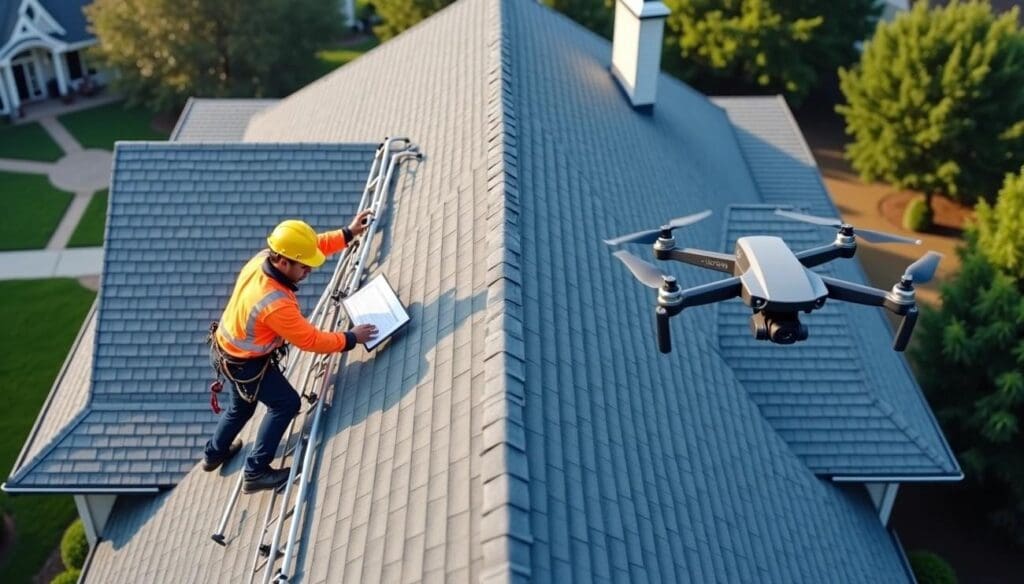
These inspection methods differ in how they work. Traditional inspections need climbing equipment, safety harnesses, and physical roof access. A doesn’t need any of these things.
Picture this: A traditional inspector takes hours to set up ladders, secure safety gear and walk carefully on your roof. A drone operator stays safely on the ground and captures complete aerial footage in minutes.
The benefits become clearer with complex structures that have multiple elevations or steep pitches. Drones easily reach tricky spots that would need special equipment or put inspectors at risk. This makes them perfect for cedar shake roofs that foot traffic can damage.
The quality of documentation makes another big difference. Drones take high-resolution images and video from every angle to create permanent digital records. These detailed visuals help us at spot subtle damage patterns that we might miss during a regular walkthrough.
Both methods work well for different needs. Traditional inspections give hands-on assessment, while drone technology is safer, faster and provides better visual documentation. Most homeowners get the best results when we combine both methods – that’s exactly what we do at . Have questions? Call us at.
Cost, licensing, and choosing the right method
The cost of roof inspections varies substantially between different methods. Traditional roof inspections range from CAD 104.50 to CAD 278.67. Drone roof inspections cost an average of CAD 487.68, with prices ranging from CAD 139.34 to CAD 1045.02 based on your roof’s size and complexity. At , our simple drone inspection services start at CAD 348.34.
Canadian drone regulations require operators to get proper licensing. Commercial use of any drone above 250g needs a Pilot Certificate from Transport Canada. The Small Basic Exam costs just CAD 13.93 for simple operations, while advanced operations require extra certifications and fees.
These significant restrictions apply:
- Maximum altitude of 122 meters (400 feet)
- No flying within 5.6km of airports or 1.9km of heliports
- Always maintaining visual line of sight
Your specific needs determine the best inspection method. Drone inspections provide quick, detailed overviews without disrupting building operations. Traditional methods work better for physical testing and sample collection. To cite an instance, many property owners combine both methods—they use drones to get an overall assessment and follow up with targeted traditional inspections where needed.
or call us today at to get professional drone roof inspection services in Edmonton.
Conclusion
Drone roof inspections have clear advantages over traditional methods based on the facts. They get the job done 90% faster and provide complete visual documentation that catches issues traditional inspections often miss. Both approaches have their place, but drone technology saves time and money for most property owners.
Drones make the inspection process much safer. Our team at can stay on solid ground while capturing detailed images of your roof system. This works really well for cedar shake roofs and buildings with multiple levels.
Regular inspections make solid financial sense. Finding small problems early can save thousands in repairs down the road. Insurance companies now want proof of regular maintenance to keep policies active.
The best solution for most homeowners combines both approaches. Drones give us a full picture first, and we follow up with hands-on inspection only where needed. This smart approach saves time while ensuring quality results.
The choice becomes clearer as we head into 2025. or call us at to book your drone roof inspection with . Your roof shields everything you care about—we’ll help keep it in top shape for years ahead.
Key Takeaways
Discover how drone technology revolutionizes roof inspections, delivering faster results, enhanced safety, and superior documentation compared to traditional climbing methods.
• Drone inspections are 90% faster than traditional methods, completing comprehensive roof assessments in hours rather than days while maintaining superior accuracy.
• Safety risks are virtually eliminated with drone technology, as inspectors remain safely on the ground instead of climbing steep or fragile roofing surfaces.
• Cost-effectiveness varies by complexity: Traditional inspections cost CAD 104-279, while drone inspections range CAD 139-1045 depending on roof size and complexity.
• Documentation quality is superior with drones, capturing high-resolution images and video from multiple angles that create permanent digital records for future reference.
• Combining both methods delivers optimal results – using drones for comprehensive overview followed by targeted traditional inspection only where hands-on assessment is necessary.
The smart approach for 2025 is leveraging drone technology for initial assessments while reserving traditional methods for specific situations requiring physical testing. This hybrid strategy maximizes efficiency, safety, and thoroughness while protecting your most valuable investment.
FAQs
Q1. How much time can drone roof inspections save compared to traditional methods?
Drone roof inspections can save up to 90% of the time compared to traditional methods, completing comprehensive assessments in hours rather than days.
Q2. What are the cost differences between drone and traditional roof inspections?
Traditional roof inspections typically cost between CAD 104.50 to CAD 278.67, while drone roof inspections range from CAD 139.34 to CAD 1045.02, depending on roof complexity and size.
Q3. Are drone roof inspections safer than traditional methods?
Yes, drone inspections are significantly safer as inspectors remain on the ground, eliminating the risks associated with climbing steep or fragile roofing surfaces.
Q4. How often should I have my roof inspected?
It’s recommended to schedule bi-annual inspections – in spring after winter and fall before the next freeze-thaw cycle. For roofs nearing their lifecycle end (15-25 years), annual professional inspections are crucial.
Q5. What are the advantages of drone roof inspections in terms of documentation?
Drone inspections provide superior documentation by capturing high-resolution images and videos from multiple angles, creating detailed digital records that allow for better identification of subtle damage patterns.